

Government shutdowns are significant political and economic events that capture public attention because of their wide-ranging impact on society. When government shutdown news breaks, it often signals that elected political leaders have failed to agree on critical funding measures by mandated deadlines — a situation that can halt or delay essential public services, furlough federal workers, disrupt everyday life, and shake financial markets.
In early 2026, the United States once again entered a government shutdown, making headlines around the world. Below is an in-depth look at the latest government shutdown news, including the causes, consequences, ongoing negotiations, historical context, and what this means for everyday people.
Government Shutdown News: What Is a Government Shutdown?
Before diving into the latest government shutdown news, it helps to understand what a shutdown actually is.
A government shutdown happens when a country’s legislative body (in the U.S. this is Congress) fails to pass laws that allocate funding for government operations and agencies by a legal deadline. In the United States, this deadline is typically tied to the start of the fiscal year on October 1 or to various appropriations deadlines set throughout the year. If Congress doesn’t approve all necessary spending bills or a short-term extension, many federal departments and programs must halt operations immediately or suspend “non-essential” functions until funding is restored.
Essential services such as national defense, law enforcement, and social safety-net programs like Social Security and Medicare sometimes continue during shutdowns, but many agencies — including parks, research institutions, and administrative offices — may scale back or temporarily close.
Government Shutdown News: The Latest Developments in 2026
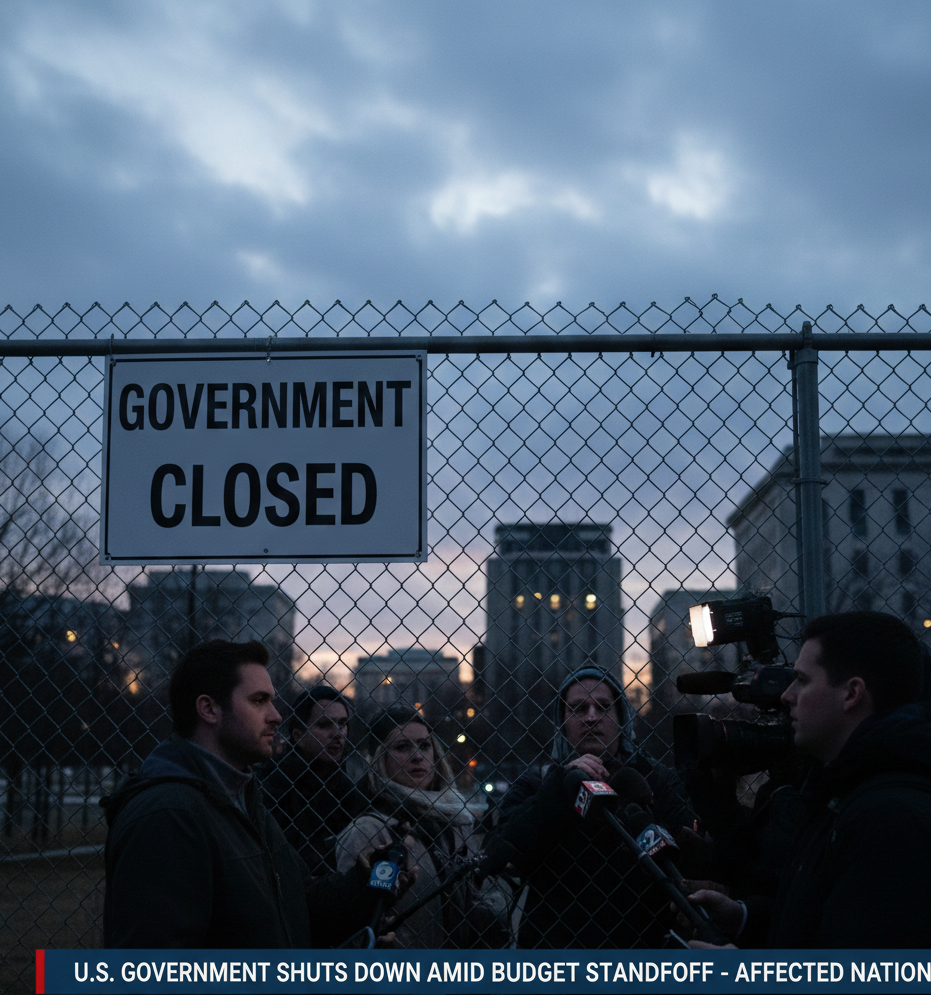
In late January and early February 2026, the U.S. government entered a partial government shutdown after lawmakers failed to pass a complete set of spending bills by the deadline. Despite a compromise spending package being passed by the Senate, disagreements over funding for the Department of Homeland Security (DHS) — particularly relating to immigration enforcement policies — prevented timely approval in the House of Representatives.
The shutdown officially began when funding lapsed at 12:01 a.m. Eastern Standard Time on January 31, 2026. At that moment, funding authorizations for several federal departments expired, triggering the shutdown process outlined in federal budget rules.
As of the most recent government shutdown news:
- Federal agencies that do not have approved appropriations are operating under shutdown procedures or reduced staffing.
- House Speaker Mike Johnson has said a vote to end the shutdown will not occur until after procedural steps early in the week, with no quick resolution on Monday and a likely continuation into Tuesday or beyond.
- Democrats are withholding support for the current funding package because of disagreements over immigration enforcement funding, complicating an already narrow Republican majority.
- Republicans and some Democrats had reached an agreement in the Senate to fund most federal agencies and provide a brief extension for DHS, but the House had not yet acted on it in time to prevent the funding lapse.
Government Shutdown News: Why the 2026 Shutdown Happened
The most recent government shutdown news revolves around deep partisan disagreements in the U.S. Congress, particularly over immigration policy and how the Department of Homeland Security (DHS) should be funded and regulated. Democrats in both chambers of Congress have sought to attach immigration reform conditions — such as body-camera requirements for agents, limits on masked patrols, and increased oversight — to DHS funding. They argue these reforms are necessary after several high-profile incidents involving federal immigration enforcement agents.
Republicans, on the other hand, have resisted linking immigration enforcement policy changes to funding continuity, emphasizing border security and enforcement priorities instead. This fundamental policy disagreement contributed directly to the failure to pass full appropriations before the shutdown began.
The Senate attempted a compromise by splitting DHS funding from the larger spending package so most agencies could remain funded while allowing more time to negotiate the immigration issue. However, because the House did not vote on the Senate’s compromise before the deadline, a partial shutdown still occurred.
Government Shutdown News: A Look Back at the 2025 Shutdown
To understand the current government shutdown news, it is useful to consider the previous shutdown that occurred in late 2025. That shutdown began on October 1, 2025, when Congress again failed to pass a full appropriations package by the fiscal year deadline. This impasse lasted for 43 days, making it the longest government shutdown in U.S. history.
During the 2025 shutdown:
- Hundreds of thousands of federal employees were furloughed or worked without pay.
- Federal agencies and research programs were scaled back or stopped entirely in many cases.
- Economic output was reduced, and public frustration grew as essential services stalled.
That shutdown ended when Congress passed a spending bill that then-President Donald Trump signed into law, reopening federal operations and allowing furloughed workers to return, with back pay.
Government Shutdown News: Impact on Federal Workers and Services
One of the biggest human stories in any government shutdown news is the impact on the federal workforce. During shutdowns, federal employees fall into two categories:
- Furloughed Workers: These are employees whose duties are considered “non-essential.” They are sent home without pay until funding is restored.
- Essential Workers: These employees — such as air traffic controllers, military personnel, and border security agents — must continue working without pay during the shutdown and are typically compensated retroactively once funding resumes.
Shutdowns also affect public services. For example:
- National parks and museums often close or operate under limited capacity.
- Administrative operations like visa processing, permits, and certain grant programs may be delayed.
- Scientific research, economic reporting, and food safety inspections can be paused or slowed.
Social programs such as Social Security, Medicare, and Medicaid often continue during shutdowns because they are funded by mandatory appropriations rather than annual spending bills. However, administrative components of these programs may still face delays or reduced services depending on the agency’s staffing levels.
Government Shutdown News: The Economic Consequences
Government shutdown news isn’t just political — it also has real economic effects.
Shutdowns can:
- Slow economic growth due to reduced consumer confidence and disrupted government services.
- Delay economic data releases, complicating decisions by businesses and policymakers.
- Affect industries that rely on federal oversight or contracts, such as construction, defense, and research.
- Increase uncertainty in financial markets as investors evaluate risks tied to prolonged funding standoffs.
In the 2025 shutdown, estimates suggested that each week of funding delay could shave off a measurable portion of GDP growth.
Government Shutdown News: How Negotiations Work
The core of most government shutdown news is always negotiations between political parties and branches of government. In the U.S. system, the House of Representatives and the Senate must both pass spending bills (or a continuing resolution), and the President must sign them into law. Failure in any step can trigger a shutdown.
During the 2026 shutdown:
- The Senate passed a compromise funding plan that separated DHS funding from other spending bills.
- House Democrats refused to expedite passage of the compromise without policy concessions.
- House Speaker Mike Johnson indicated procedural delays would push a floor vote further into the week, prolonging the shutdown.
This kind of legislative standoff is common when major policy disagreements coincide with budget deadlines — especially in deeply divided political environments.
Government Shutdown News: What Happens Next?
At the time of the latest government shutdown news, lawmakers are returning to Washington with the goal of resolving the funding impasse. House Speaker Johnson has expressed confidence that enough votes exist to pass funding that could end the shutdown by early February, potentially as soon as Tuesday, February 3, 2026.
Negotiations continue over both spending levels and specific policy provisions, especially around DHS and immigration enforcement. If lawmakers reach an agreement, funding can be restored and most federal operations can resume. If not, the shutdown could drag on longer, leading to deeper impacts on workers, services, and public confidence in government.
Government Shutdown News: International and Historical Context
Shutdowns are not unique to the United States, but they are most commonly discussed in American political contexts due to the structure of the U.S. federal budget process. Government shutdown news often grabs global headlines because the United States plays a central role in international affairs, global markets, and multinational agreements.
Historical U.S. shutdowns — such as the 2018-2019 closure and the record-long 2025 shutdown — provide important context for how costly and disruptive prolonged funding gaps can be.
Government Shutdown News: What You Should Know
Here’s a quick summary of key takeaways from the latest government shutdown news:
- A partial federal government shutdown began in early 2026 due to a funding stalemate in Congress over DHS and immigration policy.
- Shutdowns occur when lawmakers fail to pass funding legislation by required deadlines.
- Federal services, workers, and public programs can face wide-ranging impacts during a shutdown.
- Political negotiations in both legislative chambers are ongoing, and a resolution could arrive soon if lawmakers bridge their differences.
Government Shutdown News: Final Thoughts
Government shutdown news can feel technical or distant to many people, but its effects are very real — from unpaid federal workers to disrupted services and broader economic repercussions. Following developments closely helps citizens understand how political decisions affect daily life and what might happen next as negotiations unfold.
Stay tuned to reliable news sources for real-time updates as lawmakers work to resolve this shutdown — and to see whether the impasse ends soon or continues to shape American politics in 2026.
