

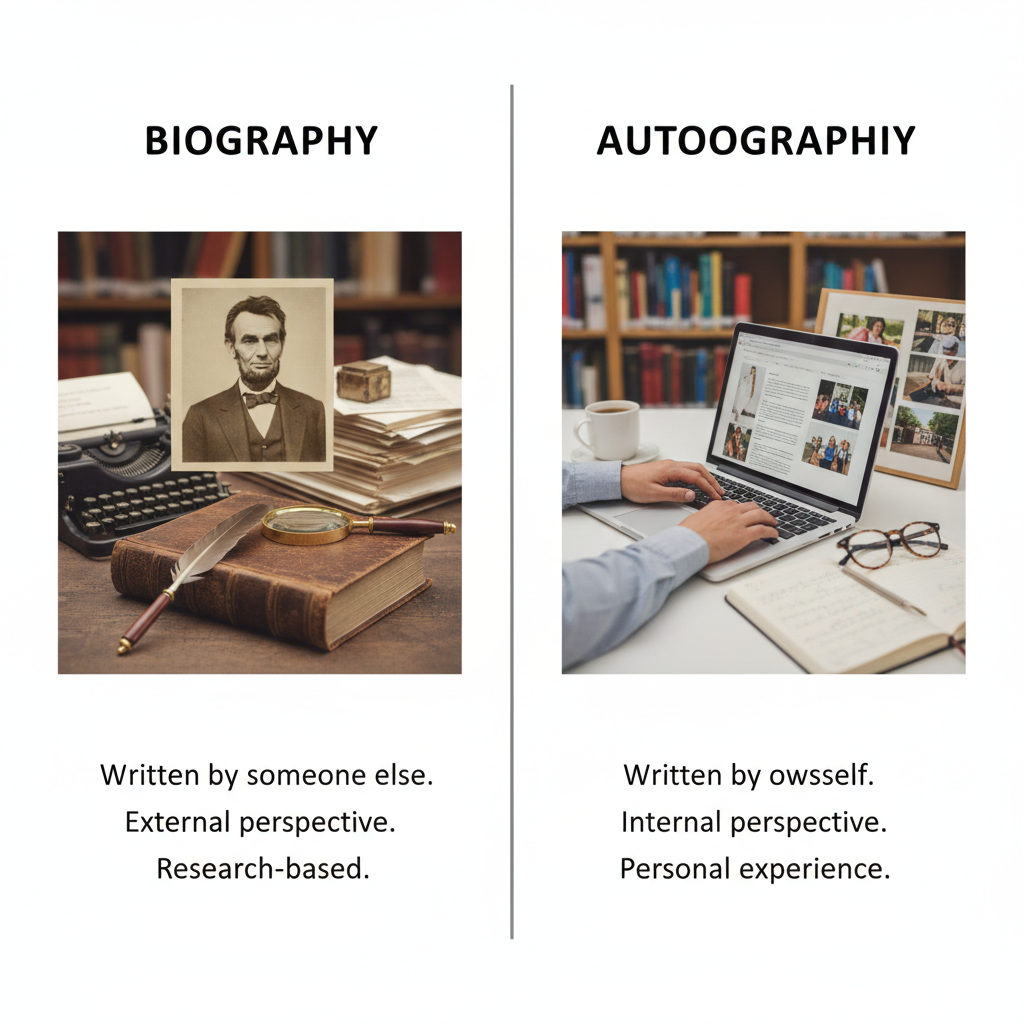
When exploring literature, history, or personal narratives, you may encounter the terms biography vs autobiography. While they seem similar, the two forms of writing serve distinct purposes. Understanding the differences helps readers, students, and writers identify perspectives, authenticity, and narrative style.
A biography is the story of someone’s life written by another person, while an autobiography is a self-written account. Both forms document experiences, achievements, and challenges, but the viewpoint, tone, and depth vary greatly. This article delves into the detailed comparison of biography vs autobiography, their characteristics, examples, advantages, limitations, and significance in literature and education.
Biography vs Autobiography: Definition and Basic Concept
What Is a Biography?
A biography is a written account of a person’s life authored by someone else. It focuses on:
- Major life events, achievements, and struggles
- Historical and cultural context
- Perspective and interpretation by the writer
Biographies aim to present an objective or well-researched narrative. Famous biographies include The Diary of a Young Girl (as told by others’ interpretation) and Steve Jobs by Walter Isaacson.
What Is an Autobiography?
An autobiography is written by the person whose life is being narrated. It is often first-person and includes:
- Personal experiences and reflections
- Insights into feelings, motivations, and thoughts
- Events from the author’s perspective
Examples of famous autobiographies include The Story of My Experiments with Truth by Mahatma Gandhi and Long Walk to Freedom by Nelson Mandela.
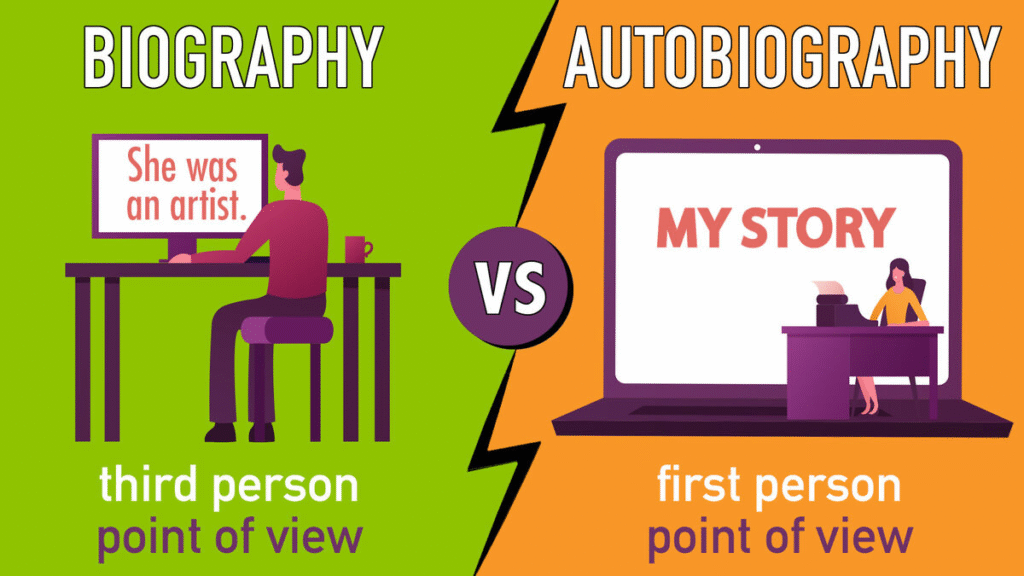
Key Difference in Perspective
- Biography: Third-person, written by someone else
- Autobiography: First-person, written by the individual themselves
This distinction is at the core of the biography vs autobiography debate, as it affects authenticity, bias, and storytelling style.
Biography vs Autobiography: Purpose and Objective
Purpose of a Biography
Biographies aim to:
- Document historical or personal significance
- Provide insight into someone’s impact on society
- Educate or inspire readers with life lessons
Biographers often research archives, conduct interviews, and analyze evidence to ensure accuracy.
Purpose of an Autobiography
Autobiographies are meant to:
- Share personal experiences and viewpoints
- Reflect on one’s life journey, lessons, and challenges
- Communicate intimate thoughts that only the subject can offer
The distinction of biography vs autobiography lies in who controls the narrative and how personal the insights are.
Biography vs Autobiography: Writing Style and Tone
Writing Style in a Biography
- Objective, formal, and structured
- Includes third-person narration
- Relies on facts, records, and external sources
- May include quotes from the subject, letters, or interviews
Writing Style in an Autobiography
- Personal and reflective
- First-person narration
- Emotional and subjective
- Provides in-depth insight into motivations and feelings
The writing style affects the reader’s engagement and perspective, making the distinction between biography vs autobiography crucial in literature studies.
Biography vs Autobiography: Reliability and Objectivity
Objectivity in Biographies
Biographies can be more objective because:
- Authors can cross-verify facts from multiple sources
- Less likely to be biased by personal emotions
- Can present contrasting viewpoints
However, some biographies may still reflect the biographer’s interpretation, which can influence neutrality.
Subjectivity in Autobiographies
Autobiographies are inherently subjective:
- Authors might highlight achievements and minimize failures
- Events are seen through the author’s lens
- Can include personal bias, but offer authenticity of experience
This subjective vs objective aspect is a key factor in understanding biography vs autobiography.
Biography vs Autobiography: Historical Significance
Biographies in History
Biographies help preserve historical knowledge:
- Document influential figures’ lives (e.g., political leaders, scientists)
- Offer critical perspectives on historical events
- Serve as educational resources in schools and universities
Autobiographies in History
Autobiographies provide personal insight into history:
- Reveal first-hand experiences of social, political, or cultural events
- Help understand the psychological and emotional aspects of historical figures
- Often used as primary sources in historical research
Both forms play complementary roles in preserving history and understanding human experience, highlighting the importance of biography vs autobiography.
Biography vs Autobiography: Examples for Better Understanding
Famous Biographies
- Steve Jobs by Walter Isaacson – Explores Jobs’ career, personality, and innovations
- Alexander Hamilton by Ron Chernow – Focuses on the life of a founding father
- Einstein: His Life and Universe by Walter Isaacson – Provides a detailed scientific and personal account
Famous Autobiographies
- Long Walk to Freedom by Nelson Mandela – Mandela’s personal struggle against apartheid
- The Story of My Experiments with Truth by Mahatma Gandhi – Insights into Gandhi’s philosophy and life
- I Know Why the Caged Bird Sings by Maya Angelou – Personal reflections and early life experiences
Studying these works helps clarify the difference between biography vs autobiography in terms of viewpoint, depth, and personal involvement.
Biography vs Autobiography: Advantages and Disadvantages
Advantages of Biographies
- Often more fact-checked and reliable
- Provides multiple perspectives on the subject
- Offers a broader context, including societal or historical background
Disadvantages of Biographies
- May lack intimate personal perspective
- Could reflect the biographer’s bias or interpretation
- Limited insight into private thoughts of the subject
Advantages of Autobiographies
- Authentic first-hand account
- Provides insight into emotions, motivations, and personal experiences
- Often more relatable and engaging for readers
Disadvantages of Autobiographies
- Can be biased or selective
- May exaggerate achievements or downplay failures
- Limited external perspective or critique
This comparison further emphasizes why distinguishing biography vs autobiography is essential when choosing reading material or conducting research.
Biography vs Autobiography: Educational Importance
Importance in Literature Studies
- Teaches narrative perspective, storytelling, and factual reporting
- Helps students analyze bias and reliability
- Encourages critical thinking by comparing subjective vs objective accounts
Importance in Personal Development
- Autobiographies inspire personal growth through first-hand experiences
- Biographies provide role models and historical lessons
- Both forms offer life lessons, motivation, and cultural awareness
Educators often include both in curricula to teach the contrast and complement of biography vs autobiography.
Biography vs Autobiography: Writing Tips for Students and Authors
Tips for Writing a Biography
- Conduct thorough research
- Verify facts from multiple sources
- Maintain objectivity and avoid personal bias
- Use a structured narrative with chronological events
Tips for Writing an Autobiography
- Write in first-person perspective
- Include personal reflections and emotions
- Be honest but concise
- Highlight key events and lessons learned
Understanding these writing tips makes it easier for authors to approach either genre effectively and appreciate the differences in biography vs autobiography.
Biography vs Autobiography: Modern Trends
In recent years, both genres have evolved:
- Biographies now include multimedia components, podcasts, and interactive formats
- Autobiographies include memoir-style narratives focusing on personal experience rather than chronological facts
- Celebrity autobiographies often blend storytelling with insights from social media, interviews, and personal reflections
These trends show how the comparison of biography vs autobiography continues to be relevant in contemporary literature.
Conclusion: Mastering the Difference Between Biography vs Autobiography
Understanding biography vs autobiography is essential for readers, students, and writers. While biographies provide external perspectives, research-backed narratives, and broader historical context, autobiographies offer intimate, first-person reflections and personal insight.
Both forms have unique value in literature, education, and historical understanding. Recognizing the differences allows readers to critically evaluate sources, appreciate storytelling styles, and gain insight into human experiences from multiple perspectives.
Whether for academic purposes, personal growth, or pure interest in stories of life and achievement, exploring biography vs autobiography opens a window into the world of narrative, history, and human emotion.
